



A paper mailer looks simple. The question that matters is not how it looks on a shelf — it is whether it still protects the product after a drop, a stack of parcels, and a long journey in a courier van. Before you choose a mailer, or a machine to make one, test it the way a parcel is actually treated.
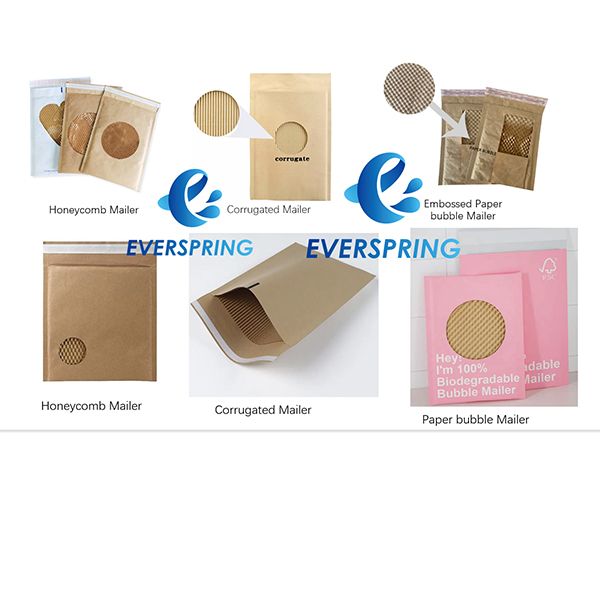
This guide explains the two tests that matter most — drop testing and compression testing — and how to use the results to choose between honeycomb, embossed, and corrugated paper mailers.
1. What a drop test really tells you
A drop test drops a packed mailer from a set height, usually on a corner, an edge, and a flat face, and checks the product inside after each drop. It answers one question: does the cushioning absorb the impact, or does it pass the shock through to the product?
For e-commerce parcels, the most useful check is simple and repeatable: pack the product exactly as you would ship it, drop it from the height your courier is likely to handle — a table height and a waist height are a good starting point — and inspect the product and the mailer seal after every drop. If the seal opens or the cushioning flattens and does not recover, the mailer is too light for that product, whatever its paper weight says on paper.
Honeycomb paper mailers perform well here because the honeycomb structure spreads the impact across a larger area. Embossed paper mailers offer a lighter cushion for smaller, lighter items. If a product fails a drop test in a standard mailer, the answer is usually a thicker honeycomb layer or a corrugated padded mailer, not a thicker outer paper alone.
2. What a compression test really tells you
A compression test stacks weight on a mailer, or presses it in a tester, until it deforms. It answers a different question: what happens when your parcel sits at the bottom of a pile in a warehouse or a delivery van?
This is where many mailers fail. A mailer that survives a drop can still crush under stacking, especially for heavier products such as books, electronics accessories, or cosmetics in glass. When you compare mailers, ask for the stacking load the mailer is rated for, and test it with the real product weight — not an empty mailer.
Corrugated padded mailers are the stronger choice for heavier or fragile products, because the corrugated layer keeps its shape under load. A honeycomb mailer with a higher GSM outer paper is a good middle ground for medium-weight products. For light, flat items, a standard embossed mailer is usually enough, and paying for extra compression strength adds cost without benefit.
3. Match the test result to the mailer type
Use the two tests together, and the choice becomes clear:
- Light and flat (under about 500 g): embossed paper mailer. Check the seal and the drop test only.
- Medium weight, standard e-commerce goods: honeycomb padded mailer. Check both the drop test and a short stacking test.
- Heavy or fragile (over about 1 kg, glass, or electronics): corrugated padded mailer. Check compression first, then the drop test.
If a product is close to a boundary, test the stronger mailer. The cost difference per mailer is usually small compared with the cost of a damaged product, a return, and a lost customer.
4. Paper GSM is not the whole story
Paper weight matters, but it does not decide protection on its own. A heavier outer paper improves puncture resistance and print quality, yet it does little for impact absorption if the cushioning layer is thin. That is why two mailers with the same outer GSM can perform very differently in a drop test.
When you specify a mailer, specify three things: the outer paper GSM, the cushioning type and thickness (honeycomb, embossed, or corrugated), and the test it must pass. A supplier who can only quote GSM cannot tell you whether the mailer will protect your product.
5. Test the mailer your machine will actually make
If you make your own mailers, test samples from your own machine, not only samples from a supplier’s showroom. Check the seal strength, the consistency of the cushioning layer, and whether the bag size fits the product without too much empty space — a mailer that is too large lets the product move, and movement makes every drop worse.
Run the same drop and compression checks on the first production batch, and repeat them when you change paper suppliers or GSM. A machine that holds its settings — consistent sealing temperature, consistent folding, and a stable cushioning layer — is what turns a passing test sample into a passing production run.
Conclusion
Drop and compression testing is not a laboratory exercise. It is the fastest way to stop guessing between mailer types and to choose one that protects the product, at a cost that makes sense.
Start with the product weight and fragility, run a drop test and a stacking test with the real product, and let the results choose the mailer: embossed for light items, honeycomb for most e-commerce goods, and corrugated for heavy or fragile products.
If you are choosing a machine to produce these mailers, Everspring’s honeycomb padded mailer machine and corrugated padded mailer machine are built for this range — from light embossed mailers to heavy-duty corrugated padded mailers. Contact Everspring to discuss your product, your test requirements, and the mailer specification that fits them.
Post time: Nov-11-2026